 3:12
1 Dec
Guardian Up Close
A portable negative pressure wound therapy system for veterinary teams, built for animal health rather than adapted from it. Here is how it works, what is in the kit, which wounds it is used for, and how to get one into your practice.
After the wound is cleaned, soft foam is cut to fit and placed in it.
A clear, sticky film seals over the top, so the dressing is airtight.
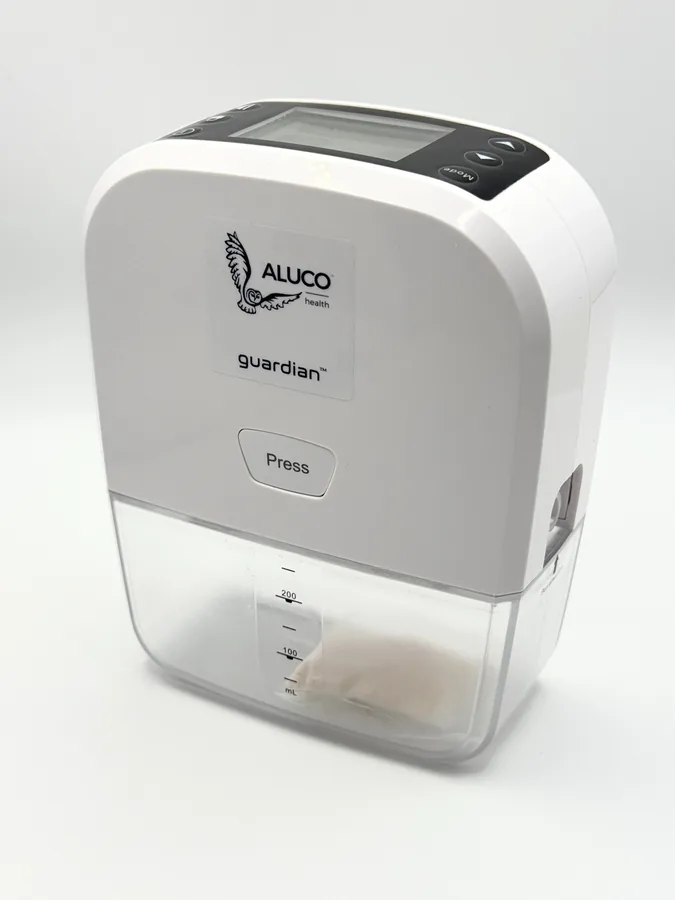
A tube links a suction pad to the pump, which applies steady, controlled suction.
Wound fluid is drawn away into a 300 mL pot on the pump, not left in the dressing.
A sealed dressing and a small pump gently draw fluid away. When it is working, the foam looks shrunken and wrinkled under the film.
Watch: What is NPWT? · What NPWT does to tissue
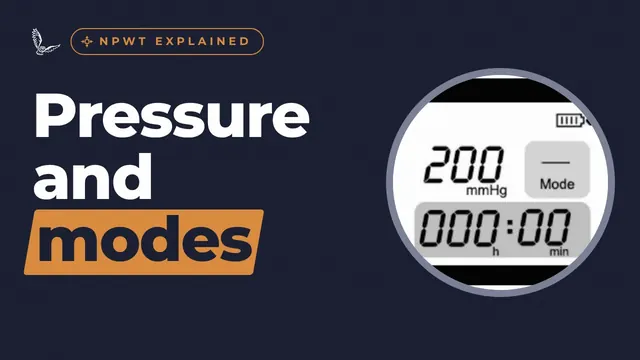
| Pressure | 50 to 200 mmHg, set in 5 mmHg steps, with the pressure shown on screen. The user manual gives 100 to 150 mmHg as typical veterinary therapy; the user guide gives 125 mmHg continuous as typical. Lower settings are often used over grafts and stitched edges. The clinician decides. |
|---|---|
| Therapy modes | Continuous (the default and recommended mode) and intermittent (5 minutes on, 2 minutes off). |
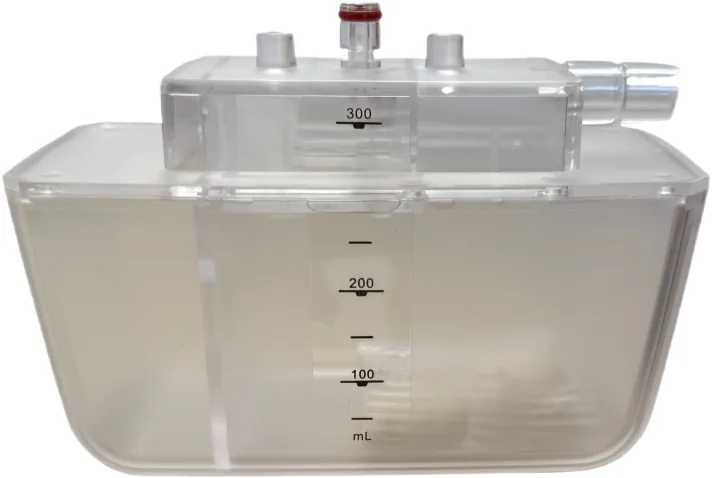
| Canister | 300 mL, single use, with overflow protection. Clicks into the unit; replaced when full, never emptied. |
| Battery | Rechargeable; stated to last at least 12 hours. Charge for at least six hours before first use. Runs on mains power or battery. |
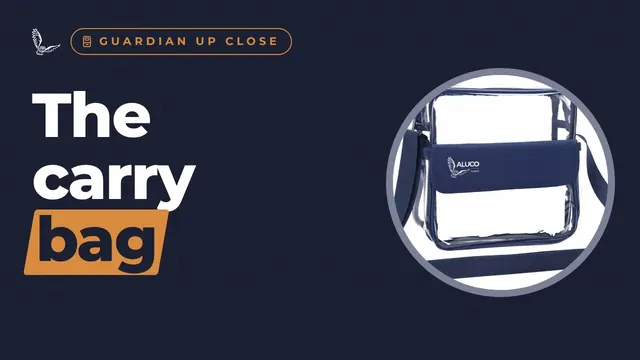
| Weight | About 1.2 kg. Must be used upright; the carry bag lets it hang outside the kennel or go on short walks. |
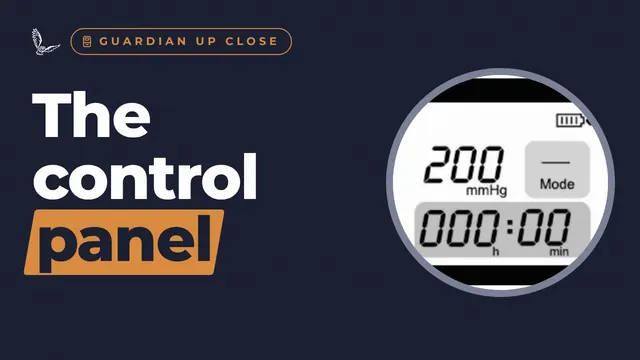
| Screen and controls | LCD display showing pressure, mode, therapy time and battery. Six soft buttons: Power, Mode, up and down arrows, Start and Lock. The Lock button prevents accidental changes. |
| Alarms | High pressure (HPA), usually a blockage or a full canister; low pressure (LPA), usually a leak or a loose connection; low battery, when less than about 20 minutes of therapy is left. |
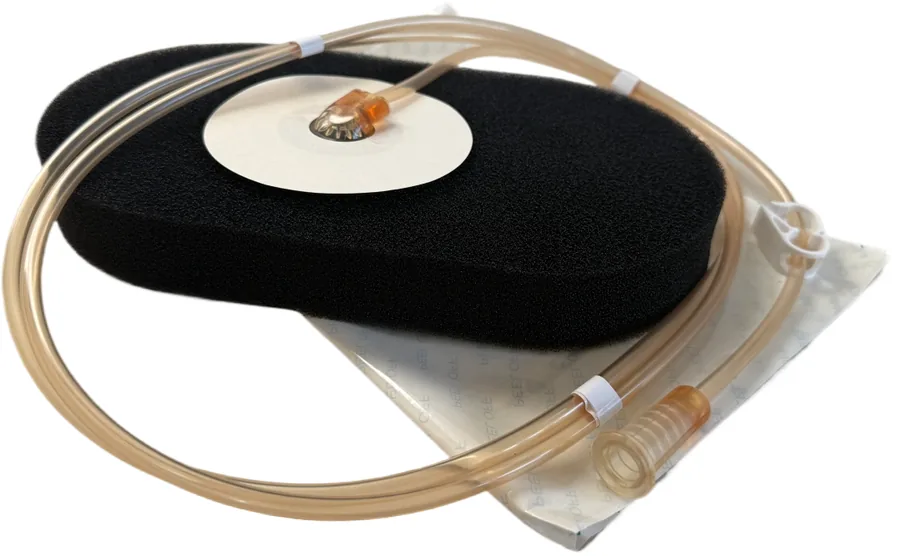
| Dressing kit | Single use: foam that can be cut to shape, film drape, and a suction pad with tube. |
| Users | Veterinary professionals. Only trained staff should use the device. Never leave a dressing without suction for more than two hours. |
From the Aluco Guardian™ instructions for use (December 2024) and user guide (December 2025). Always follow the current instructions for use. Download the user guide (PDF)
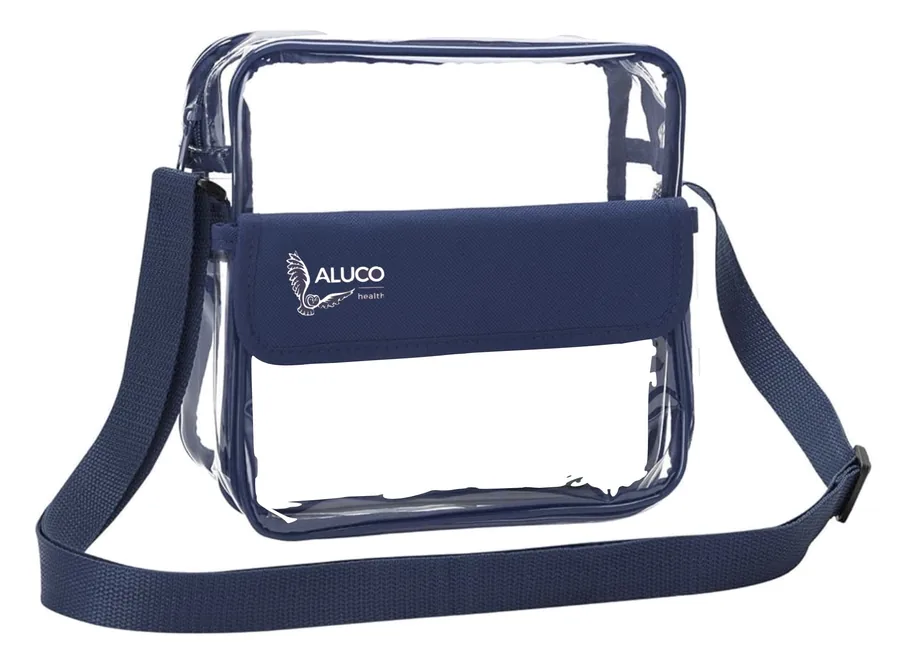
Watch: Changing the canister · The carry bag · The control panel, button by button
NPWT helps manage an open wound while it gets ready to close or heal. It does not replace cleaning and surgery. Your vet decides whether it suits each wound; the instructions for use list when it must not be used.
Small holes can hide big damage underneath. NPWT can help manage the open wound once it has been cleaned.
Watch: Bite wounds, explained →Skin torn away from a leg or paw, often after a road accident, managed as an open wound for a while.
Watch: Degloving injuries, explained →When a repair comes apart, the cause is found and the wound is prepared before it is closed again.
Watch: When a surgical wound opens up →Many infected wounds need opening and cleaning, not just tablets. NPWT keeps the wound sealed and covered.
Watch: Infected surgical wounds →Heavy wound fluid is drawn away into the canister rather than soaking the dressing.
Watch: Very wet wounds →A graft must be held close and still while it takes. NPWT is used at a gentler setting over grafts.
Watch: Skin grafts and flaps →Dead, damaged or dirty tissue is removed (debridement) and the wound is flushed (lavage).
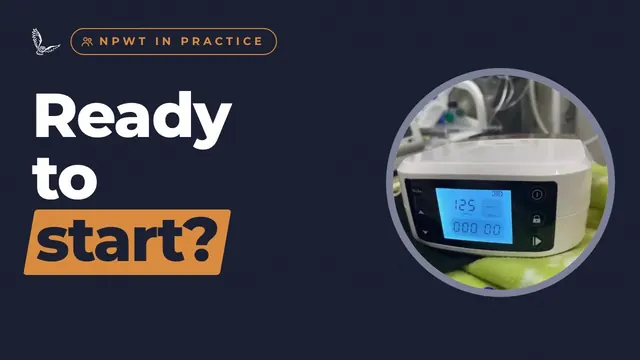
Clip wide, dry the skin, fit the foam, seal the film and connect the pad.
Continuous suction is typical. The dressing is usually changed every 48 to 72 hours.
At every change, photograph, measure and record, and let the findings decide.
Once the wound bed is ready, it is stitched closed, reconstructed, or left to heal.
Watch: What to have ready before you start · The first dressing change · When to stop NPWT · Getting a wound ready to close
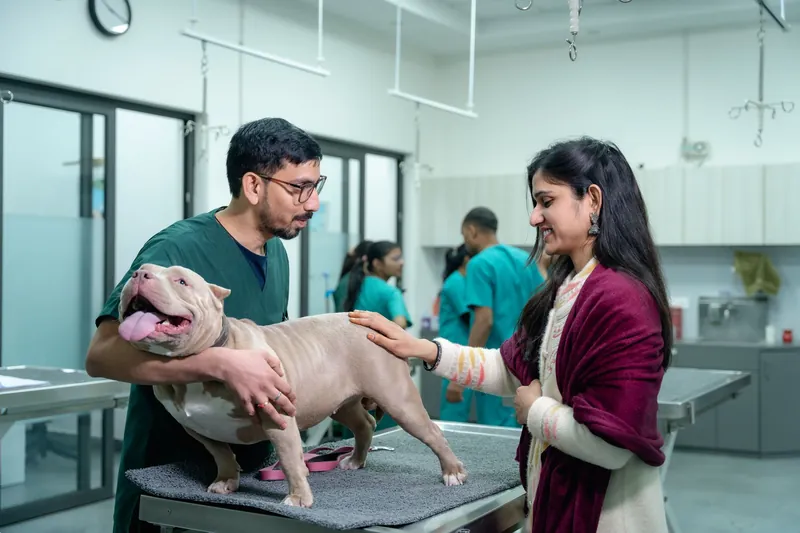
Demonstrations and practical training for the whole team, so everyone who handles the device is confident with the seal, the settings and the alarms.
Aluco's clinical support for vet teams is available round the clock, including live guidance by WhatsApp while you apply a dressing.
Veterinary NPWT has a history of being withdrawn when makers refocus on human healthcare. Aluco was built with one focus: animal health.
The veterinary evidence for NPWT is promising, but most of it comes from small or uncontrolled studies, using other manufacturers' systems. Here is what each kind of study shows, and what it does not.
Dressings were changed every two to three days, and 96% of the wounds followed up went on to heal. No comparison group; other NPWT systems.
Pitt KA, Stanley BJ. Vet Surg 2014;43(4):380–387.
Under meshed skin grafts, healthy healing tissue appeared at a median of two days with NPWT, against seven with a standard dressing. Small, experimental; other NPWT systems.
Stanley BJ et al. Vet Surg 2013;42(5):511–522.
Cases from referral centres and a first-opinion practice show the settings, dressing changes and next steps used with the Guardian. Each is one case, not proof of effect.
3:12
1 Dec 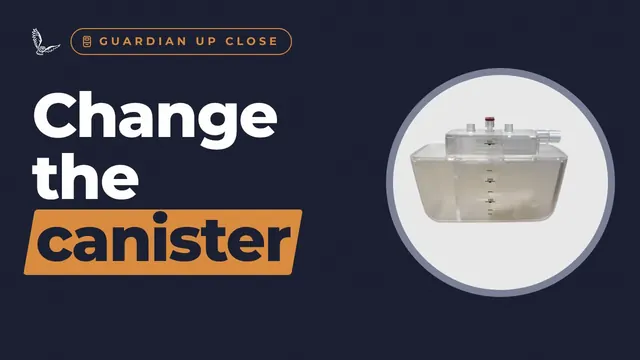 2:31
1 Dec
 2:27
11 Feb
 3:07
21 Jan
 3:16
1 Dec
 4:00
1 Dec
Book a demonstration, hire a Guardian for one patient, or buy for a regular caseload. Every option includes training and round-the-clock clinical support for vet teams.
The Aluco Guardian™ is for use by veterinary professionals. Only trained staff should apply the dressing and run the device. Aluco provides demonstrations, practical training and round-the-clock clinical support for vet teams.
You can set the pressure from 50 to 200 mmHg, in 5 mmHg steps. The user manual gives 100 to 150 mmHg as typical for veterinary therapy, and the user guide gives 125 mmHg continuous as typical use. Lower settings are often used over grafts and stitched edges. The choice is always the clinician's.
Continuous is the default and recommended mode: steady suction all the time, suitable for most wounds. Intermittent switches on for five minutes and off for two. In a published study of 45 dogs, the authors found cats disliked on-off suction and used continuous suction for cats.
The battery is stated to last at least 12 hours. Charge it for at least six hours before first use. A low-battery alarm shows when less than about 20 minutes of therapy is left, so plug it in when you can.
No. The 300 mL canister is single use. When it is full, it is clicked out and replaced, not emptied, and the used canister goes into clinical waste.
Yes. Practices can hire a Guardian for one case, with dressing kits and canisters for the whole plan, then return it when treatment finishes. Many practices hire first and think about buying once they are seeing regular cases.
Demonstrations are for veterinary practitioners and practices in the UK and EU. For other countries, contact Aluco Health at info@alucohealth.com.
Aluco Guardian™ is for use by veterinary professionals. Always follow the current instructions for use. Evidence mentioned is not specific to Aluco Guardian™ unless we say so.