Very wet (heavily oozing) wounds in dogs: how vets manage them
Why some wounds make a lot of fluid, why too much is a problem, the dressings vets use, and how negative pressure wound therapy (NPWT) collects wound fluid in a sealed canister. For pet owners and vet teams.
Three things to remember
- Some wound fluid is normal.
- Too much needs managing.
- Watch how the fluid changes over time.
The full episode, written out
This is the narration from the video, so you can read it at your own pace, share it, or come back to a section.
Introduction
Welcome to Aluco Health. I'm Georgie Hollis. This is Wounds Explained. Today: very wet wounds. Why do some wounds make so much fluid, and how do vets manage it?
Soaking through
Some wounds make so much fluid that it soaks straight through the bandage. In one of our case reports, it was soaking through both a foam dressing and a three-layer bandage. So why are some wounds so wet, and how do vets manage it?
Jargon buster
Vets call wound fluid exudate, said EX-you-date. Some fluid is normal. In fact, a wound needs to be kept a little moist to heal well, because drying out damages the healing cells.
Why too much is a problem
But too much fluid causes problems. The skin around the wound can become soft and soggy, which can help a stitched wound come apart. Fluid soaking through to the outside of a bandage, called strike-through, means it has to be changed. And wet-to-dry dressings for very wet, dirty wounds are usually changed every twelve to twenty-four hours, often with sedation each time.
Dressing options
Vets have several options. Wet-to-dry dressings are used early on for very wet, dirty wounds. Alginate dressings, which turn to gel, suit very wet wounds and can stay on for about three days. Foam dressings absorb moderate amounts of fluid. And NPWT draws the fluid away into a sealed canister.
Where NPWT fits
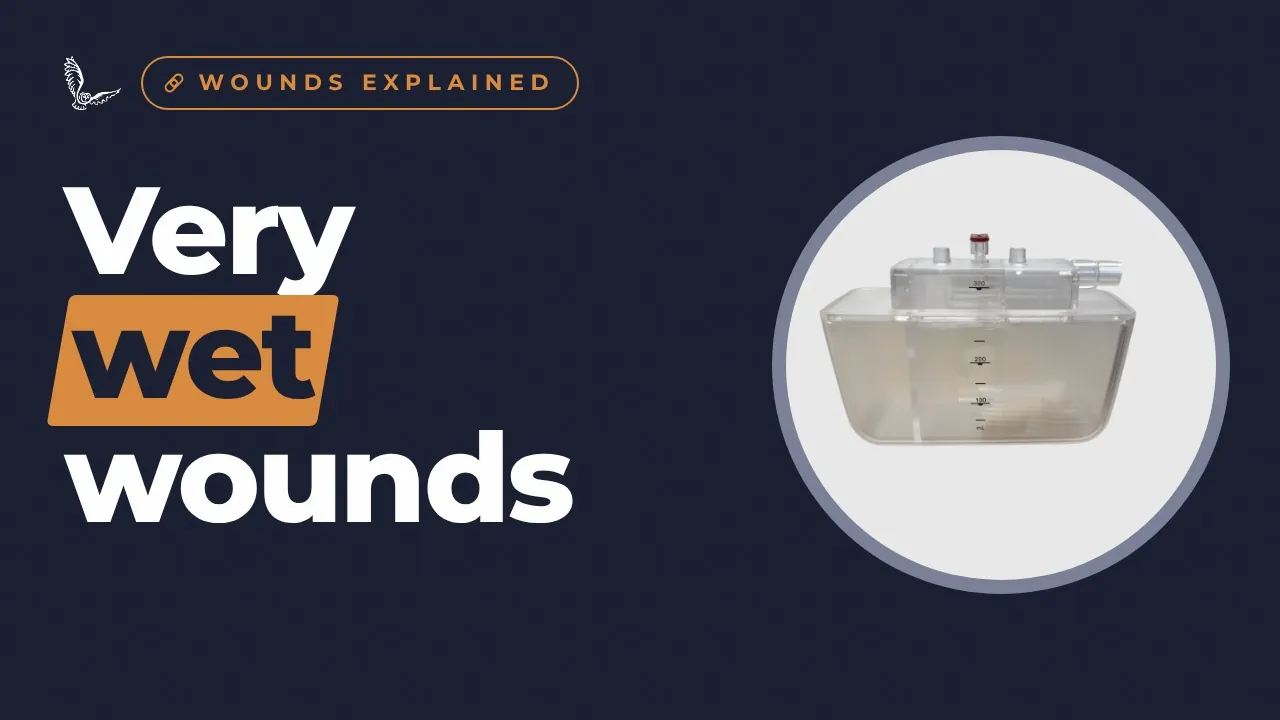
With NPWT, the foam and film seal the wound, and gentle suction draws the fluid through the tube into the canister. In the forty-five-dog study, the authors noted that strike-through was completely eliminated, because all the wound fluid went into the canister.
How many canisters
How much fluid are we talking about? Each canister holds three hundred millilitres. In our case reports, one wound filled four canisters during a single seventy-two-hour dressing. Another used two per three-day cycle. And a large thigh wound needed just one over three days. So vet teams plan their stock around the wound.
What to watch
The canister also tells you how the wound is doing. A Vet Times review advises recording the volume, colour and thickness of the fluid regularly. A falling volume, and fluid that's getting clearer, suggest progress. Other changes may mean the wound is getting worse. When the canister is full, the pump stops and alarms, so it's swapped, not emptied.
Tips
A few practical tips. Keep the unit hanging upright: one team noted this prevents false full-canister alarms. Plan enough canisters. And change the dressing sooner if it leaks or becomes saturated.
Myth or fact?
A common belief is that a wet wound must be infected. Not always. Some fluid is normal, and a review for vets says wound fluid should not on its own lead to antibiotics. What matters more is the amount, the colour and how it changes over time. Your vet will decide.
Words explained
- Exudate
- Wound fluid.
- Strike-through
- Wound fluid soaking through to the outside of a bandage.
- Maceration
- Skin made soft and soggy by too much moisture.
- Alginate
- A dressing made from seaweed fibres that turns to gel as it absorbs fluid.
Sources
- S1Aluco Health. Case study 009: Wound breakdown after wide mast cell tumour excision. Case provided by Lisa Telford RVN, Edinburgh Veterinary School. Approved; published on alucohealth.com.
- S2Nonhealing wounds. Clinician's Brief (web article). www.cliniciansbrief.com/article/nonhealing-wounds
- S3Pavletic MM. Wound dehiscence: causes, prevention, management. MSPCA-Angell Animal Medical Center, October 2023. www.mspca.org/wp-content/uploads/2023/12/Pavletic_Wound-Dehiscence.pdf
- S4Pitt KA, Stanley BJ. Negative pressure wound therapy: experience in 45 dogs. Vet Surg 2014;43(4):380–387. doi:10.1111/j.1532-950X.2014.12155.x pmc.ncbi.nlm.nih.gov/articles/PMC5026415
- S5Hattersley R. Management of canine and feline degloving injuries. Vet Times, 1 October 2018. www.vettimes.com/clinical/small-animal/management-of-canine-and-feline-degloving-injuries-cpdcriticalcare
- S6Campbell BG. Managing degloving and shearing injuries. Clinician's Brief, 2011. cliniciansbrief.com/article/managing-degloving-shearing-injuries
- S7Aluco Health. Case study 001: Nico, rapid granulation and definitive closure. Case provided by Anna Cronin DipECVS, Wear Referrals. Approved; published on alucohealth.com.
- S8Aluco Health. Case study 003: Greyhound with pancarpal arthrodesis wound breakdown. Case provided by Lisa Telford RVN, Edinburgh Veterinary School. Approved; published on alucohealth.com.
- S9Aluco Health. Case study 006: Hindlimb wound after wide mast cell tumour resection. Case provided by Jackie Demetriou, Granta Veterinary Specialists. Approved; published on alucohealth.com.
- S10Aluco Health. ALUCO GUARDIAN™ negative pressure wound therapy system: quick start guide (2 pages).
- S11Hollis G. Reviewing negative pressure wound therapy in animals. Vet Times, 12 November 2024. www.vettimes.com/news/vets/small-animal-vets/reviewing-negative-pressure-wound-therapy-in-animals
- S12Aluco Health. Case study 002: Cocker spaniel with severe bilateral inguinal SSIs. Case provided by Anna Cronin DipECVS, Wear Referrals. Approved; published on alucohealth.com.
- S13Aluco Health. ALUCO GUARDIAN™ user manual: simplified and improved version.
General information about animal wound care, not veterinary advice. Always follow your vet's advice. Aluco Guardian™ is for use by veterinary professionals. Evidence mentioned is not specific to Aluco Guardian™ unless we say so.
See the Aluco Guardian™ in your practice
Hire one for a single case, try it with a demonstration, or buy for a regular caseload. Training and round-the-clock clinical support for vet teams come with it.
Ask your vet whether NPWT could help
Your vet knows your pet best. Take your questions to them, or send them this page.
Watch next
 3:53
2 Feb
Skin grafts and flaps in dogs: how they work and how NPWT helps
 1:59
1 Dec
 3:23
1 Dec
 2:31
1 Dec