Dog surgical wound opened up? Why it happens and what vets do
Content note. The video shows real clinical wound photos from a clinician-reported case, shared with permission. They appear after a warning screen. The written guide below has no photos.
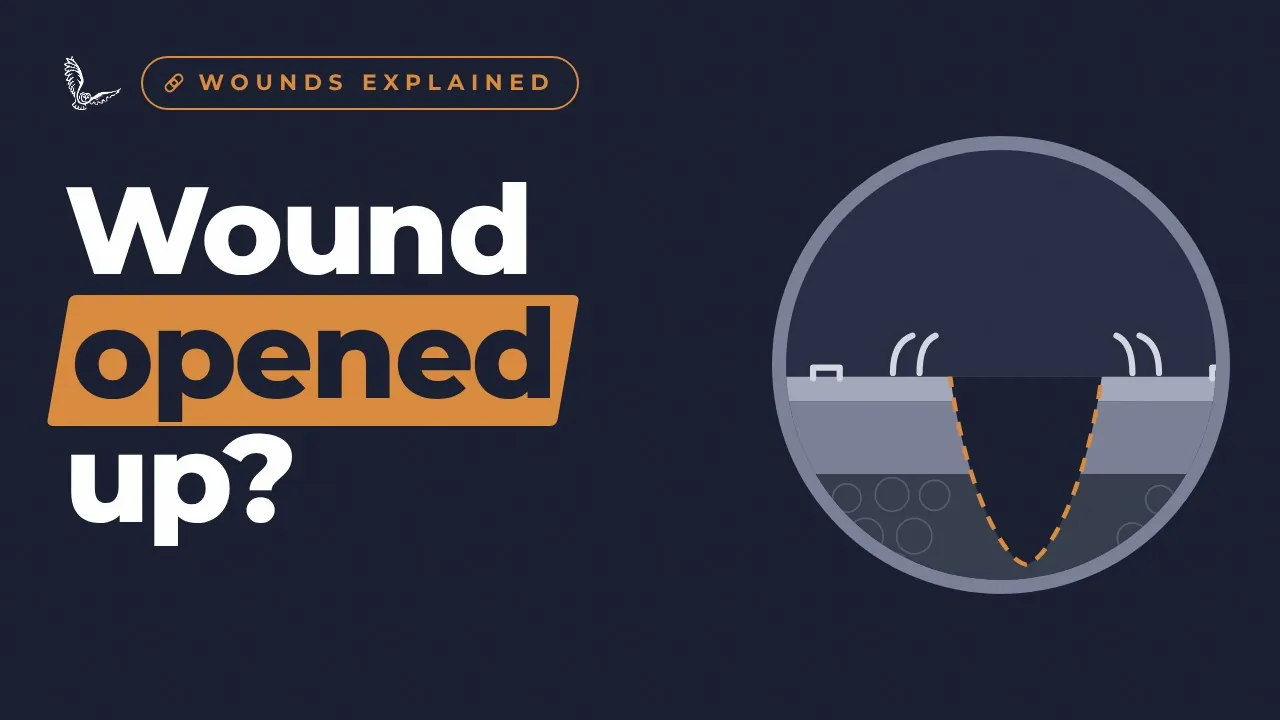
Why a stitched surgical wound sometimes comes apart (dehiscence), what vets usually do next, where negative pressure wound therapy (NPWT) can fit, and how owners can lower the risk. For pet owners and vet teams.
Three things to remember
- Tension and movement matter.
- Your vet will find the cause before closing again.
- If something doesn't look right, call your vet early.
The full episode, written out
This is the narration from the video, so you can read it at your own pace, share it, or come back to a section.
Introduction
Welcome to Aluco Health. I'm Georgie Hollis. This is Wounds Explained. Today: what happens when a stitched surgical wound comes apart. Why does it happen, what do vets do next, and how can you lower the risk?
It was stitched
Your dog had surgery. The wound was stitched, and everything looked fine. Then, days later, it starts to come apart. In one of our case reports, a wound opened seven to eleven days after a lump was removed. It's worrying. So why does it happen, and what can be done?
What it is
Here's a stitched wound in the skin. When it comes apart, the stitches give way, the edges separate, and a gap opens down into the tissue underneath. Sometimes it's just the skin. Sometimes it goes deeper, into the fat below.
Jargon buster
Vets call this dehiscence, said dee-HISS-ence. It just means a stitched wound has come apart, partly or completely. In one published study of forty-five dogs treated with negative pressure, about one in fourteen of the wounds were surgical wounds that had opened up like this.
Why it happens
A specialist surgeon's list of common causes includes these. Closing a wound under too much tension is the most common. Movement, licking and chewing can all pull at the stitches. A pocket of infection or dead tissue underneath can stop the wound holding. Too much moisture makes the skin soggy. And some medicines, such as steroids, can slow healing. Often, it's a mix.
What vets do
When a wound opens, your vet will look closely to work out why, because that changes the plan. The wound is checked for infection and dead tissue, and cleaned. Often it's left open for a while, with dressings, until the tissue is healthy. Then it can be closed again, sometimes with techniques that take the tension off, or left to heal on its own.
Where NPWT fits
NPWT can be used during that open stage. Foam fills the wound, a film seals it, and gentle suction draws the fluid away into a canister. In two of our case reports, it was used on wounds that had come apart after lumps were removed. One was on a thigh, where tension and a mobile area were thought to have played a part. The other was over a stifle, the knee of the back leg.
A real example
Here's one example from Edinburgh Veterinary School. An eight-year-old dog's wound opened after a mast cell tumour was removed from over the stifle. The team thought tension and the dog's high activity had played a part. Wound fluid was soaking through the dressings. They used NPWT, with the patient checked every two hours, for an initial three days. Then a skin-stretching technique was used, and the wound was fully closed within a month. This is one clinician-reported case.
Lowering the risk
If your pet has had surgery, a few things can help. Keep the cone or collar on as your vet advises. In one study of dogs after soft tissue surgery, not using the collar properly was linked to infection. Keep them rested, as advised. Look at the wound each day. And if you see a gap, swelling, discharge or anything that worries you, call your vet early.
Myth or fact?
A common thought is that the wound just needs stitching up again. Sometimes it can be. But if the cause is still there, such as tension, infection or dead tissue, it may open again. So vets usually find the cause and get the wound healthy first.
Words explained
- Dehiscence
- A surgical wound that has come apart after being stitched.
- Debridement
- Cleaning away dead, damaged or dirty tissue.
- Stifle
- The knee of a dog's back leg.
Sources
- S1Pavletic MM. Wound dehiscence: causes, prevention, management. MSPCA-Angell Animal Medical Center, October 2023. www.mspca.org/wp-content/uploads/2023/12/Pavletic_Wound-Dehiscence.pdf
- S2Aluco Health. Case study 009: Wound breakdown after wide mast cell tumour excision. Case provided by Lisa Telford RVN, Edinburgh Veterinary School. Approved; published on alucohealth.com.
- S3Espinel-Rupérez J, Martín-Ríos MD, Salazar V, et al. Incidence of surgical site infection in dogs undergoing soft tissue surgery: risk factors and economic impact. Vet Rec Open 2019;6:e000233. pmc.ncbi.nlm.nih.gov/articles/PMC6802975
- S4Pitt KA, Stanley BJ. Negative pressure wound therapy: experience in 45 dogs. Vet Surg 2014;43(4):380–387. doi:10.1111/j.1532-950X.2014.12155.x pmc.ncbi.nlm.nih.gov/articles/PMC5026415
- S5Aluco Health. Case study 006: Hindlimb wound after wide mast cell tumour resection. Case provided by Jackie Demetriou, Granta Veterinary Specialists. Approved; published on alucohealth.com.
General information about animal wound care, not veterinary advice. Always follow your vet's advice. Aluco Guardian™ is for use by veterinary professionals. Evidence mentioned is not specific to Aluco Guardian™ unless we say so.
See the Aluco Guardian™ in your practice
Hire one for a single case, try it with a demonstration, or buy for a regular caseload. Training and round-the-clock clinical support for vet teams come with it.
Ask your vet whether NPWT could help
Your vet knows your pet best. Take your questions to them, or send them this page.
Watch next
 4:53
1 Dec
Degloving injury in dogs and cats: what it is and how vets treat it
 1:59
1 Dec
 3:23
1 Dec
 2:31
1 Dec