Dog bite wounds: why small holes can hide big damage
Why a bite that looks like two small holes can hide much bigger damage underneath, what vets usually do about it, and where negative pressure wound therapy (NPWT) can help. For pet owners and vet teams.
Three things to remember
- Small holes can hide big damage.
- Every bite needs a vet check.
- NPWT can help manage the open wound while it gets ready to close or heal.
The full episode, written out
This is the narration from the video, so you can read it at your own pace, share it, or come back to a section.
Introduction
Welcome to Aluco Health. I'm Georgie Hollis. This is Wounds Explained, and today it's bite wounds. They can fool almost anyone, because what you see on the outside is rarely the whole story. So why can a small bite turn into a big problem, and how do vets treat it?
Two small holes
Picture a dog who comes home from the park after a scuffle with another dog. It's a made-up example, but a very familiar one. There are two small holes in the skin, a little blood, and the dog seems fine. It's tempting to clean it up and wait. But with bites, what you can see on the surface is often only a small part of the injury.
Teeth crush and tear
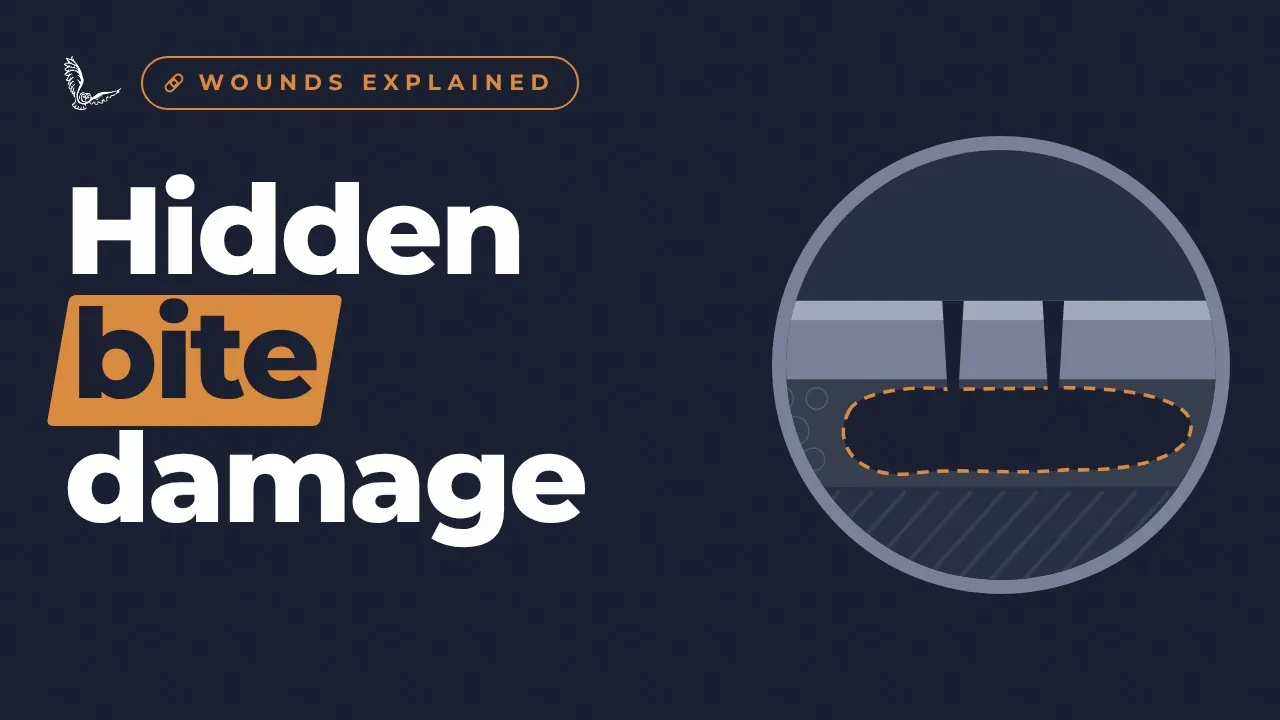
Here's why. The teeth go through the skin, but skin is loose and stretchy, so it often moves out of the way and is left with just small holes. Underneath, it's a different story. The teeth crush, tear and shear the fat and muscle below, and the skin can be pulled away from the tissue underneath. Vets call this the iceberg effect: a small amount of damage on top, and much more hidden below.
Germs get trapped inside
That hidden damage matters for three reasons. First, teeth carry germs from the mouth, and a bite pushes them, along with hair and dirt, deep under the skin. Second, the torn tissue leaves gaps, which vets call dead space, where fluid and germs can collect. Third, the small holes on the surface can close over, trapping everything underneath. That's how a bite that looked minor can turn into an infected wound, or an abscess, a few days later.
Jargon buster: debridement
You might hear your vet use the word debridement. It sounds technical, but it simply means cleaning away dead, damaged or dirty tissue, so that healthy tissue is left to heal. It's one of the most important steps in treating a bite.
What your vet may do
So what might your vet do? Every case is different, but the usual steps look like this. First, check the whole animal, give pain relief, and look for injuries that aren't obvious, because bites can go deeper than the skin. Second, clip the fur and flush the wound with plenty of fluid, to wash out dirt and germs. Third, open up and explore the wound, and remove damaged tissue. Fourth, manage it as an open wound for a while. And fifth, once it's clean and healthy, close it with stitches, or let it heal on its own.
Why some bites stay open
You might expect every wound to be stitched straight away. With bites, that isn't always the best choice. Closing a dirty wound too early can trap germs and fluid inside. So many bite wounds are kept open and covered with dressings until the tissue is clean and healthy. If a bite is closed, your vet may leave a small tube, called a drain, to let fluid out. Leaving a wound open for a while is often part of the plan, not a sign that something's gone wrong.
Seal it, then gently draw
This is where negative pressure wound therapy, or NPWT, can help. After the wound has been cleaned, a piece of soft foam is placed into it. A clear sticky film seals over the top. A tube connects the dressing to a small pump, which gently draws air and wound fluid out, into a pot on the pump. The wound stays sealed and covered, and the dressing usually stays on for two to three days at a time.
Helping the wound get ready
So what can NPWT do for a bite wound? It draws wound fluid away into the pot, rather than leaving it in the dressing. It keeps the wound sealed and covered. In a published study of forty-five dogs, the dressings were changed every two or three days. And in a small experimental study in dogs, healthy new tissue appeared earlier in wounds treated with NPWT than with standard dressings. NPWT doesn't replace your vet's cleaning and surgery. It helps get the wound ready to close or heal.
The number to remember
Here's one number from that study of forty-five dogs with fifty-three serious wounds. Most of the dogs had injuries, such as road accidents and bites. The usual time on NPWT was just three days, and ninety-six percent of the wounds assessed went on to heal. It's important to say this study had no comparison group, and it used other NPWT systems, not the Aluco Guardian. So it shows what's possible, not that NPWT is better than other methods.
Small pump, sealed dressing
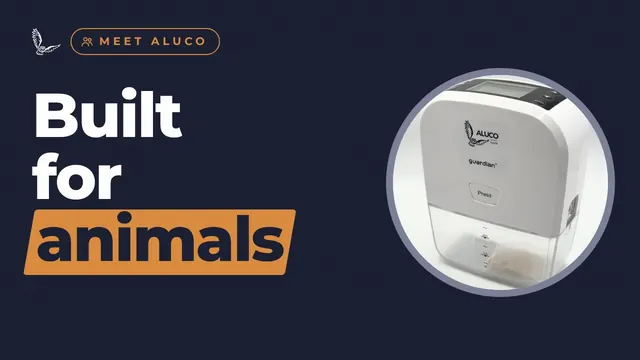
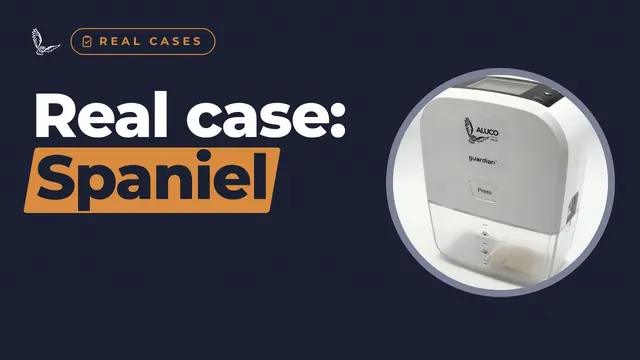
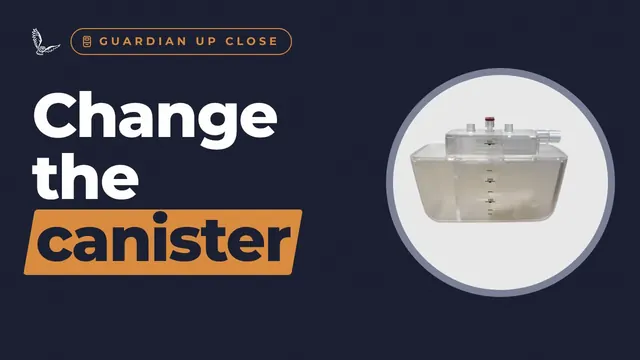
This is the Aluco Guardian, a portable NPWT system made for animals. It has a screen and buttons to set and check the suction. A tube links it to the sealed foam dressing. And a three hundred millilitre pot, called a canister, collects the fluid. When it's full, it's clicked out and replaced, not emptied. The unit is small enough to sit in a carry bag, so it can stay with the patient.
Myth or fact?
Let's clear up one thing people often get wrong. It's easy to think that a small bite is only a small problem. But as we've seen, small holes on the surface can hide deep damage underneath. So if your pet has been bitten, get it checked by a vet, even if it looks minor.
Words explained
- Debridement
- Cleaning away dead, damaged or dirty tissue so healthy tissue can heal.
- Dead space
- Gaps under the skin left by torn tissue, where fluid and germs can collect.
- Drain
- A small tube that lets fluid out of a wound.
- NPWT
- Negative pressure wound therapy: a sealed foam dressing with gentle, controlled suction.
Sources
- S1Campbell B. Wound management 2 – Penetrating injuries in dogs. Veterinary Focus, Royal Canin Academy. academy.royalcanin.com/en/veterinary/wound-management-2-penetrating-injuries-in-dogs
- S2Managing gunshot wounds and serious bite wounds (Proceedings). dvm360, 1 April 2010. www.dvm360.com/view/managing-gunshot-wounds-and-serious-bite-wounds-proceedings
- S3Pitt KA, Stanley BJ. Negative pressure wound therapy: experience in 45 dogs. Vet Surg 2014;43(4):380–387. doi:10.1111/j.1532-950X.2014.12155.x pmc.ncbi.nlm.nih.gov/articles/PMC5026415
- S4Demaria M, Stanley BJ, Hauptman JG, et al. Effects of negative pressure wound therapy on healing of open wounds in dogs. Vet Surg 2011;40(6):658–669. pubmed.ncbi.nlm.nih.gov/?term=Demaria+Stanley+2011+negative+pressure+wound+therapy+open+wounds+dogs
- S5Aluco Health. Aluco Guardian™ instructions for use (Dec 2024), user guide and quick start guide (Dec 2025); Guardian brochure claims and sources (2026).
General information about animal wound care, not veterinary advice. Always follow your vet's advice. Aluco Guardian™ is for use by veterinary professionals. Evidence mentioned is not specific to Aluco Guardian™ unless we say so.
See the Aluco Guardian™ in your practice
Hire one for a single case, try it with a demonstration, or buy for a regular caseload. Training and round-the-clock clinical support for vet teams come with it.
Ask your vet whether NPWT could help
Your vet knows your pet best. Take your questions to them, or send them this page.