Degloving injury in dogs and cats: what it is and how vets treat it
What a degloving injury is, why it happens, how vets usually treat it, and where negative pressure wound therapy (NPWT) can fit, in plain English for pet owners and vet teams.
Things to remember
- The whole patient comes first.
- The wound is cleaned, often more than once, until it's healthy.
- Healing takes time, sometimes several operations.
- But with good care, the outlook is often very good.
The full episode, written out
This is the narration from the video, so you can read it at your own pace, share it, or come back to a section.
Introduction
Welcome to Aluco Health. I'm Georgie Hollis. This is Wounds Explained, and today it's degloving injuries. What are they, how do vets treat them, and where can negative pressure wound therapy help?
Torn away, not cut
Picture a dog that's been dragged along by a car. There's no neat cut. Instead, a whole sheet of skin has been torn away from the leg. That's a degloving injury. These are complex wounds, and they take time. By the end of this video, you'll know why, and what usually happens next.
What it is
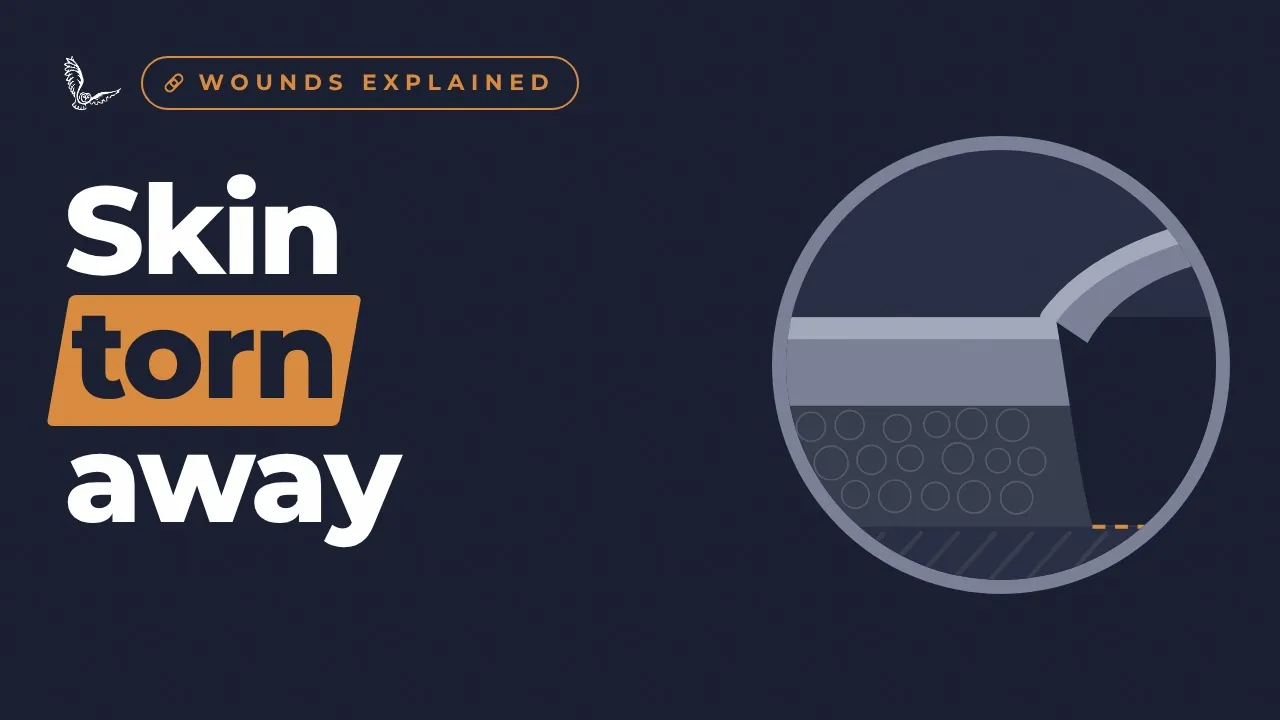
Here's the skin, the fat underneath, and the muscle below. In a degloving injury, the skin is torn away from the tissue beneath it. On the right, the skin and fat have gone, leaving the muscle exposed. At the edge, a flap of skin has lifted. When skin tears away like this, it loses its blood supply, so some of what's left may not survive.
Jargon buster
Vets call this degloving, said dee-GLUV-ing. Think of pulling off a glove. When the damage goes deeper, into tendon, ligament or even bone, it's called a shearing injury.
How it happens
Most degloving injuries happen when an animal is pushed or dragged along by a vehicle. The lower legs and paws are hit most often. It happens to dogs and to cats. In one published study of forty-five dogs treated with negative pressure, degloving or shearing injuries were the most common type of wound, at about three in ten.
The patient first
The first job is the whole animal, not the wound. After a road accident, injuries to the chest and belly aren't unusual. In one study of dogs after serious blunt trauma, more than half had bruised lungs. So your vet will check everything, give strong pain relief, and cover the wound with a clean dressing. A close look at the wound usually needs sedation or an anaesthetic, so it waits until the patient is stable. X-rays may be needed to check the joints and bones.
Cleaning the wound
Then the wound is cleaned under anaesthetic. The hair is clipped well back. The wound is flushed with plenty of fluid. The vet checks which tissue is still alive, and carefully cuts away what's dead. This often has to be repeated, because some tissue only shows whether it will survive over the next few days. The wound is kept open until it's clean, healthy and can be closed without tension.
Three ways to heal
Once the wound is healthy, there are three main routes. It can heal on its own, from the bottom up, and with good care, many do. It can be stitched closed later. Or skin can be moved in to cover it, as a flap or a skin graft. On the lower leg there's little spare skin, so healing on its own can take a long time, and grafts are common there. Your vet will choose the route that suits the wound.
Where NPWT fits
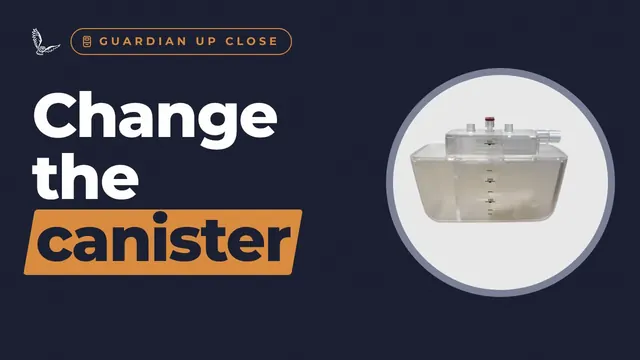
So where does negative pressure wound therapy, or NPWT, fit? It's used while the wound is open. Foam fills the wound, a clear film seals it, and a small pump applies gentle, steady suction. Wound fluid is drawn away into a canister. A clinical review for vets describes it as valuable for managing wound fluid and encouraging healing in these injuries.
Three days
In that published study of forty-five dogs, the median time on NPWT was just three days. Dressings were changed every two to three days, instead of every day, and most wounds were then closed with surgery. The study had no comparison group, and it used other manufacturers' systems, not the Aluco Guardian.
Safety
NPWT isn't put straight over everything. The Aluco Guardian instructions list exposed blood vessels, nerves, bone or tendon as reasons not to use it, along with dead tissue that hasn't been removed. And bleeding can get worse under negative pressure. Deep shearing injuries can expose exactly these structures, so your vet will decide whether NPWT is right for the wound, and when.
Myth or fact?
A common thought: if the skin's still there, why not just stitch it back? The trouble is that skin torn away like this has often lost its blood supply, and some of it may die over the next few days. So vets check what's alive first, and close the wound only when the tissue is healthy.
Words explained
- Degloving injury
- Skin torn away from the tissue underneath, like pulling off a glove.
- Shearing injury
- A deeper degloving injury that also damages tendon, ligament or bone.
- Debridement
- Cleaning away dead, damaged or dirty tissue.
- Granulation tissue
- New, healthy healing tissue (red and bumpy).
Sources
- S1Hattersley R. Management of canine and feline degloving injuries. Vet Times, 1 October 2018. www.vettimes.com/clinical/small-animal/management-of-canine-and-feline-degloving-injuries-cpdcriticalcare
- S2Campbell BG. Managing degloving and shearing injuries. Clinician's Brief, 2011. cliniciansbrief.com/article/managing-degloving-shearing-injuries
- S3Pitt KA, Stanley BJ. Negative pressure wound therapy: experience in 45 dogs. Vet Surg 2014;43(4):380–387. doi:10.1111/j.1532-950X.2014.12155.x pmc.ncbi.nlm.nih.gov/articles/PMC5026415
- S4Nolff MC. Filling the vacuum: role of negative pressure wound therapy in open wound management in cats. J Feline Med Surg 2021;23:823–833. doi.org/10.1177/1098612X211034071
- S5Aluco Health. Aluco Guardian™ Negative Pressure Therapy System user manual / instructions for use, version 1, December 2024.
General information about animal wound care, not veterinary advice. Always follow your vet's advice. Aluco Guardian™ is for use by veterinary professionals. Evidence mentioned is not specific to Aluco Guardian™ unless we say so.
See the Aluco Guardian™ in your practice
Hire one for a single case, try it with a demonstration, or buy for a regular caseload. Training and round-the-clock clinical support for vet teams come with it.
Ask your vet whether NPWT could help
Your vet knows your pet best. Take your questions to them, or send them this page.
Watch next
 5:40
1 Dec
Dog bite wounds: why small holes can hide big damage
 1:59
1 Dec
 3:23
1 Dec
 2:31
1 Dec