NPWT for your pet: questions to ask your vet
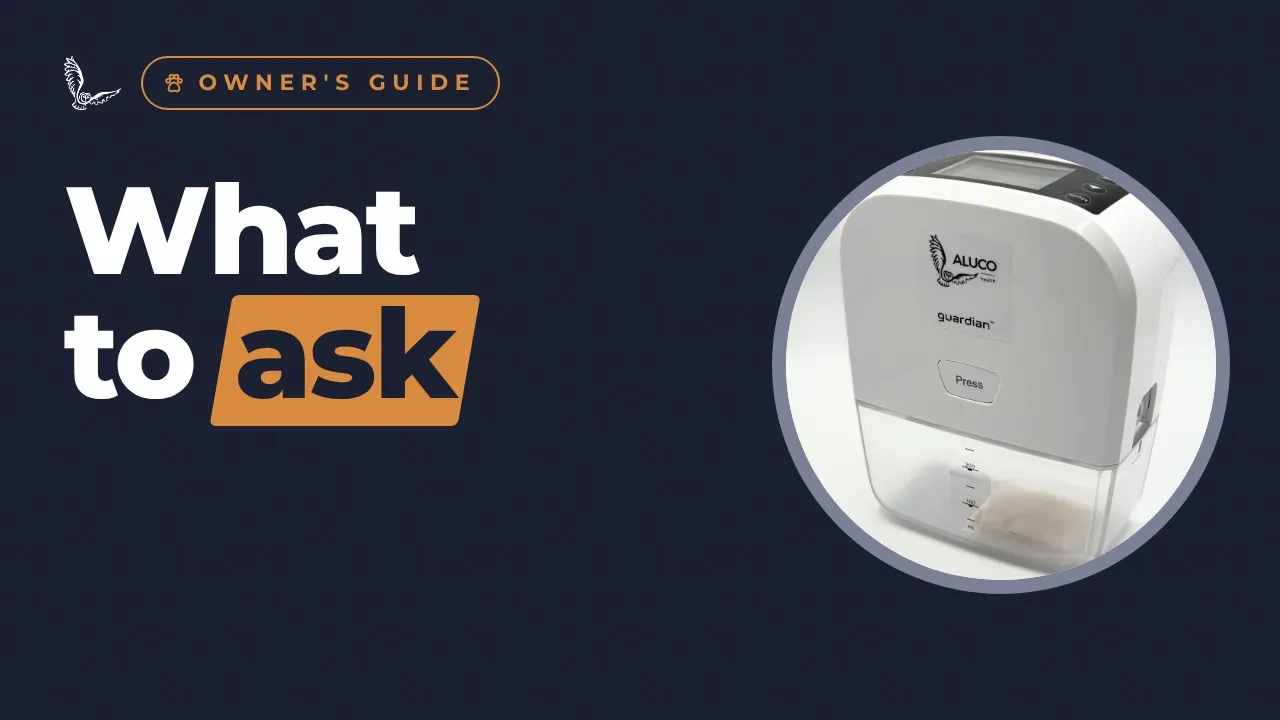
A plain-English list of questions pet owners can ask when their vet suggests negative pressure wound therapy (NPWT): why it's suggested, how long it lasts, staying in, costs for the whole course of care, what happens next, and what to do if something goes wrong. Clinics are welcome to share it with clients.
Three things to remember
- Ask why NPWT suits this wound.
- Ask about the whole course of care.
- Know who to call if you're worried.
The full episode, written out
This is the narration from the video, so you can read it at your own pace, share it, or come back to a section.
Introduction
Welcome to Aluco Health. I'm Georgie Hollis. This is the Owner's Guide. Your vet has suggested NPWT for your pet's wound, and it's a lot to take in. Here are some questions you might like to ask, and the kind of answers to expect.
What should I ask?
It's normal to feel unsure what to ask. Writing your questions down before you talk to your vet can help. Here are five groups of questions to start with.
Why NPWT?
First, why NPWT? Ask what it should help with for this wound. Ask about other options too; vets have other dressings they can use. And ask whether it's suitable for your pet. There are reasons not to use it, such as bleeding that isn't under control, or dead tissue that hasn't been removed, so your vet will check those first.
How long?
Second, how long? In one published study of forty-five dogs, NPWT was used for a median of three days. The dressing is usually changed every two to three days. Ask whether your pet will need sedation for each change; in that study, about four in five dogs did.
Staying in
Third, staying in. In the study, most dogs stayed in hospital while on NPWT. Ask who checks on your pet overnight, and how often. And ask whether you can visit: in the study, the few days between changes gave dogs time to eat, rest and spend time with visiting owners.
Costs
Fourth, costs. Ask for an estimate for the whole course of care, not just one night: how many dressing changes, sedation, nights in, and check-ups. That helps you compare like with like. For example, in the study, NPWT dressings were changed every two to three days, while traditional wet-to-dry dressings are changed every twelve to twenty-four hours.
What next?
Fifth, what next? In the study, about six in ten wounds were closed with surgery after NPWT, and about a third healed on their own. Ask what your vet will look for to know it's working. And ask what to do if something goes wrong: who to call, and when. If your pet is home and you hear an alarm, don't touch the pump or dressing; call your practice.
Myth or fact?
Some owners worry that asking lots of questions means they don't trust their vet. Not at all. Your vet team wants you to understand the plan, so you can help your pet through it.
Words explained
- NPWT
- Negative pressure wound therapy: a sealed foam dressing with gentle, controlled suction.
- Sedation
- Medicine that makes your pet calm and sleepy, so a dressing can be changed comfortably.
Sources
- S1Hattersley R. Management of canine and feline degloving injuries. Vet Times, 1 October 2018. www.vettimes.com/clinical/small-animal/management-of-canine-and-feline-degloving-injuries-cpdcriticalcare
- S2Aluco Health. Aluco Guardian™ Negative Pressure Therapy System user manual / instructions for use, version 1, December 2024.
- S3Pitt KA, Stanley BJ. Negative pressure wound therapy: experience in 45 dogs. Vet Surg 2014;43(4):380–387. doi:10.1111/j.1532-950X.2014.12155.x pmc.ncbi.nlm.nih.gov/articles/PMC5026415
General information about animal wound care, not veterinary advice. Always follow your vet's advice. Aluco Guardian™ is for use by veterinary professionals. Evidence mentioned is not specific to Aluco Guardian™ unless we say so.
See the Aluco Guardian™ in your practice
Hire one for a single case, try it with a demonstration, or buy for a regular caseload. Training and round-the-clock clinical support for vet teams come with it.
Ask your vet whether NPWT could help
Your vet knows your pet best. Take your questions to them, or send them this page.
Watch next
 3:33
1 Dec
Your pet on NPWT: what to expect from a vacuum dressing
 1:59
1 Dec
 3:16
1 Dec
 4:09
1 Dec