Your pet on NPWT: what to expect from a vacuum dressing
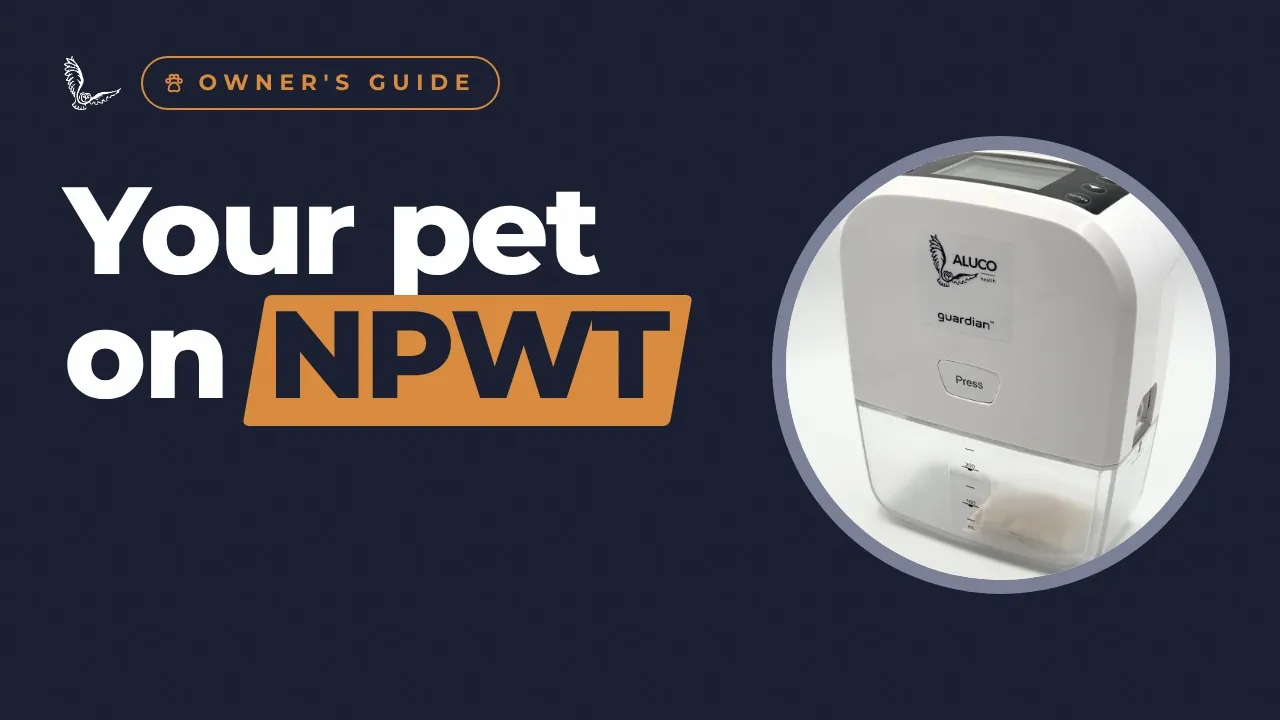
A plain-English guide for pet owners whose vet has suggested negative pressure wound therapy (NPWT): what the dressing and pump look like, how pets usually cope, how often the dressing is changed, and how owners can help. Clinics are welcome to share it with clients.
Three things to remember
- NPWT is foam, film and a small pump.
- The dressing is usually changed every few days, with your pet sedated.
- If anything worries you, call your practice.
The full episode, written out
This is the narration from the video, so you can read it at your own pace, share it, or come back to a section.
Introduction
Welcome to Aluco Health. I'm Georgie Hollis. This is the Owner's Guide. Your vet has suggested negative pressure wound therapy, or NPWT, for your pet's wound. So what will it look like, how will your pet cope, and how can you help?
A dressing with a pump
When you visit, you might see a dressing with a thin tube running from it to a small pump. It can look a bit technical. But the idea is simple, and most dogs in one published study coped with it well.
How it works
Here's what's going on under the bandage. A piece of foam is cut to fit the wound. A clear, sticky film seals over the top. A thin tube connects it to the pump, which applies gentle, steady suction. Wound fluid is drawn away into a small pot on the pump, called the canister. When it's working, the foam looks shrunken and wrinkled under the film.
The pump
The pump is small and portable. It weighs about one point two kilograms, a little more than a bag of sugar. It runs day and night, on mains power or its battery. It has to stay upright, so it's often hung outside the kennel. One referral team did just that, so the canister could be changed without disturbing the patient.
How pets cope
Between dressing changes, pets can usually eat, drink, rest and move about. In the forty-five-dog study, the few days between changes gave patients time to recover, eat, walk and spend time with visiting owners. On a leg, the dressing is often covered with a soft, padded bandage. Your pet may wear a cone, because chewing the tube is one of the problems the study reported. And in one of our case reports, Nico ate, rested and moved about with minimal stress.
How long
The dressing usually stays on for two to three days at a time. Each change is normally done with your pet sedated or under an anaesthetic. In the study, about four in five dogs needed that. At each change, the vet team looks at the wound and decides what comes next. In that study, NPWT was used for a median of three days, but every wound is different.
Where will my pet stay?
Most dogs in the study stayed in the hospital while on NPWT. Only three went home on the pump, with owners who were confident looking after them, and they came back in for dressing changes. Your vet will explain what suits your pet. Our other owner video, on staying in for wound care, explains why a stay is often advised.
How you can help
So how can you help? Ask your vet team any questions: how long it might take, how many changes, and what happens next. If your pet comes home on NPWT, leave the pump and the dressing to your vet team. Don't adjust it, switch it off or try to fix the dressing. If you hear an alarm, see fluid leaking, or anything worries you, call your practice straight away.
Myth or fact?
A common worry is that the suction must hurt. In the published study, most dogs tolerated NPWT well. The authors did find that cats disliked on-off suction, so they used steady suction for cats instead. Your vet team will keep your pet comfortable, and tell you how they're doing.
Words explained
- NPWT
- Negative pressure wound therapy: a sealed foam dressing with gentle, controlled suction.
- Canister
- The small pot on the pump that collects wound fluid.
- Sedation
- Medicine that makes your pet calm and sleepy, so a dressing can be changed comfortably.
Sources
- S1Pitt KA, Stanley BJ. Negative pressure wound therapy: experience in 45 dogs. Vet Surg 2014;43(4):380–387. doi:10.1111/j.1532-950X.2014.12155.x pmc.ncbi.nlm.nih.gov/articles/PMC5026415
- S2Aluco Health. ALUCO GUARDIAN™ negative pressure wound therapy system: quick start guide (2 pages).
- S3Aluco Health. ALUCO GUARDIAN™ user manual: simplified and improved version.
- S4Aluco Health. Case study 006: Hindlimb wound after wide mast cell tumour resection. Case provided by Jackie Demetriou, Granta Veterinary Specialists. Approved; published on alucohealth.com.
- S5Aluco Health. Aluco Guardian™ Negative Pressure Therapy System user manual / instructions for use, version 1, December 2024.
- S6Aluco Health. Case study 001: Nico, rapid granulation and definitive closure. Case provided by Anna Cronin DipECVS, Wear Referrals. Approved; published on alucohealth.com.
General information about animal wound care, not veterinary advice. Always follow your vet's advice. Aluco Guardian™ is for use by veterinary professionals. Evidence mentioned is not specific to Aluco Guardian™ unless we say so.
See the Aluco Guardian™ in your practice
Hire one for a single case, try it with a demonstration, or buy for a regular caseload. Training and round-the-clock clinical support for vet teams come with it.
Ask your vet whether NPWT could help
Your vet knows your pet best. Take your questions to them, or send them this page.
Watch next
 1:53
1 Dec
 1:59
1 Dec
 3:16
1 Dec
 4:09
1 Dec