Why is the wound so big after my dog's lump was removed?
Content note. The video shows real clinical wound photos from a clinician-reported case, shared with permission. They appear after a warning screen. The written guide below has no photos.
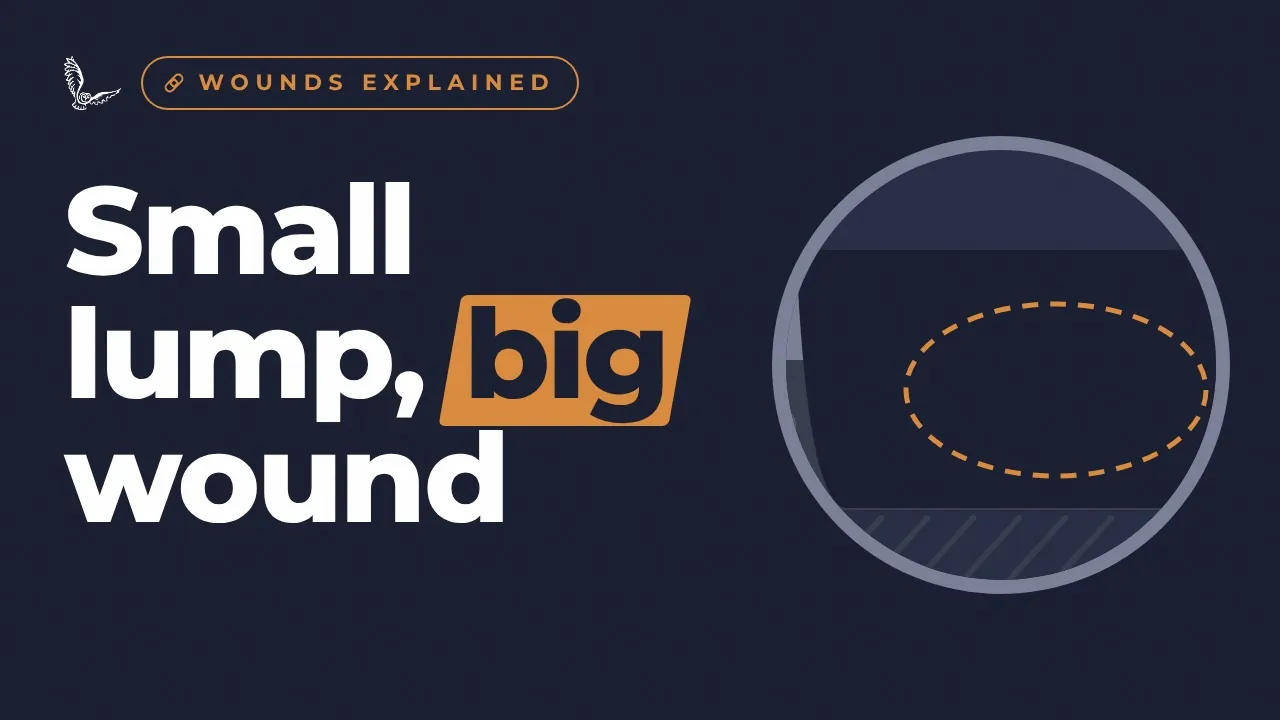
Why removing some lumps, such as mast cell tumours, leaves a much bigger wound, why some of those wounds are hard to close, and how vets manage them, including negative pressure wound therapy (NPWT). For pet owners and vet teams.
Three things to remember
- The margin is planned.
- Wounds on the legs can be harder to close.
- Your vet checks the results before choosing the next step.
The full episode, written out
This is the narration from the video, so you can read it at your own pace, share it, or come back to a section.
Introduction
Welcome to Aluco Health. I'm Georgie Hollis. This is Wounds Explained. Today: the wound left after a lump is removed. Why is it so much bigger than the lump, and what happens if it won't close?
A bigger wound
Your vet finds a lump, and it needs to come off. But afterwards, the wound is much bigger than the lump ever was. Why? And what happens when that wound is hard to close?
The margin
Some lumps are cancers whose cells spread a little way into the tissue around them. To remove them completely, surgeons take the lump, plus a margin of healthy-looking tissue around it, and a layer underneath. The dashed line shows where the lump was. Everything in the gap has been removed.
Two centimetres
Mast cell tumours are the most common skin cancer in dogs. For many of them, research supports a margin of about two centimetres around the lump, and one layer of tissue below. So a lump the size of a grape can leave a gap several centimetres across.
Hard to close
On much of the body, there's enough loose skin to close the gap. On the lower legs, closing a big gap is harder, and skin grafts are often used there. Closing a wound under tension, or over a part that moves a lot, can make it come apart. In two of our case reports, wounds came apart after mast cell tumours were removed, one from a thigh and one over the stifle.
The options
So after removal, the surgeon has choices. If there's enough skin, the wound is stitched, sometimes by moving a flap of nearby skin. If not, or if the wound comes apart, it's managed open for a while. That's where NPWT can help, by managing the wound fluid and helping prepare the wound bed until it can be closed.
A real example
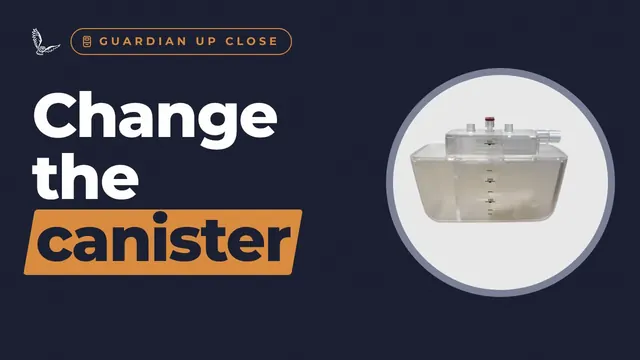
Here's an example from Granta Veterinary Specialists. A ten-year-old crossbreed had a mast cell tumour removed from his upper thigh, with clear margins. The wound had been closed, but with tension and a mobile area, part of it came apart. NPWT was used for three days, with the pump hung outside the kennel. Only one canister was needed. After a second application, the wound was closed successfully without complication. This is one clinician-reported case.
Safety
One important point. The Aluco Guardian instructions say a cancerous tumour at the wound is listed as a reason not to use NPWT. In both of our case reports, the lab had confirmed the margins were clear. So your vet will check the results before deciding.
Myth or fact?
It's easy to think a big wound means something went wrong. Usually it's the opposite. Wide margins are planned, to give a good chance of removing the whole tumour. Your vet will explain the plan for closing it.
Words explained
- Margin
- The healthy-looking tissue removed around a tumour.
- Mast cell tumour
- The most common skin cancer in dogs.
- Flap
- Nearby skin moved to cover a wound, keeping its blood supply.
Sources
- S1Scar revision after incomplete or narrow excision of canine mast cell tumours. Can Vet J 2022 (PMC9754142), introduction. pmc.ncbi.nlm.nih.gov/articles/PMC9754142
- S2Simpson AM, Ludwig LL, Newman SJ, et al. Evaluation of surgical margins required for complete excision of cutaneous mast cell tumors in dogs. J Am Vet Med Assoc 2004;224(2):236–240. pubmed.ncbi.nlm.nih.gov/14736068/
- S3Hattersley R. Management of canine and feline degloving injuries. Vet Times, 1 October 2018. www.vettimes.com/clinical/small-animal/management-of-canine-and-feline-degloving-injuries-cpdcriticalcare
- S4Aluco Health. Case study 006: Hindlimb wound after wide mast cell tumour resection. Case provided by Jackie Demetriou, Granta Veterinary Specialists. Approved; published on alucohealth.com.
- S5Aluco Health. Case study 009: Wound breakdown after wide mast cell tumour excision. Case provided by Lisa Telford RVN, Edinburgh Veterinary School. Approved; published on alucohealth.com.
- S6Aluco Health. Aluco Guardian™ Negative Pressure Therapy System user manual / instructions for use, version 1, December 2024.
General information about animal wound care, not veterinary advice. Always follow your vet's advice. Aluco Guardian™ is for use by veterinary professionals. Evidence mentioned is not specific to Aluco Guardian™ unless we say so.
See the Aluco Guardian™ in your practice
Hire one for a single case, try it with a demonstration, or buy for a regular caseload. Training and round-the-clock clinical support for vet teams come with it.
Ask your vet whether NPWT could help
Your vet knows your pet best. Take your questions to them, or send them this page.
Watch next
 4:22
3 Dec
Infected surgical wound in dogs: signs, risks and treatment
 1:59
1 Dec
 3:23
1 Dec
 2:31
1 Dec