NPWT in practice: talking to owners about negative pressure wound therapy
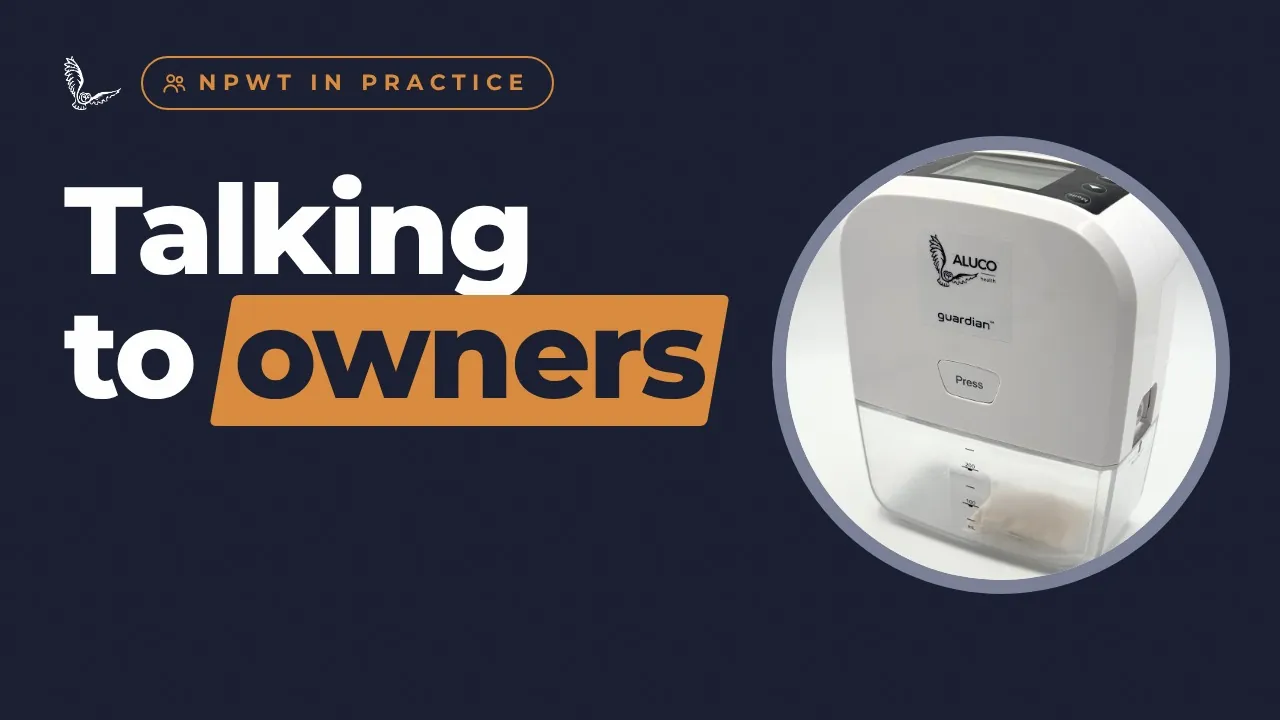
For vet teams: how to explain NPWT to pet owners. The questions owners usually ask, answers grounded in the published evidence, what not to promise, how to talk about costs without surprises, and what owners need to know if their pet goes home on NPWT: leave the pump and dressing alone, and call the practice.
Three things to remember
- Answer with the evidence.
- Promise only what's fair for this wound.
- Give owners one number to call: yours.
The full episode, written out
This is the narration from the video, so you can read it at your own pace, share it, or come back to a section.
Introduction
Welcome to Aluco Health. I'm Georgie Hollis. This is NPWT in Practice. Today: talking to owners about NPWT. What do they ask, and what should you say?
The same questions
When you suggest NPWT, owners tend to ask the same handful of questions. Clear, honest answers help them understand the plan, and help their pet through it.
What owners ask
Owners usually ask why NPWT suits this wound, how long it will take, whether it will hurt and whether their pet needs sedation, whether their pet stays in or goes home, what it will cost, and what happens next.
Answer with the evidence
Use the evidence. In the published study of forty-five dogs, the median time on NPWT was three days, and NPWT was well tolerated. Dressings are usually changed every forty-eight to seventy-two hours, and about four in five dogs in the study needed sedation or anaesthesia for changes. In between, they had time to eat, drink, move about and see visiting owners.
What not to promise
And be honest about what not to promise. Claims that NPWT heals wounds faster, controls infection, cuts costs or means fewer anaesthetics aren't supported by comparative evidence. NPWT doesn't always save time or money; it depends on the wound and the patient. Talk about what it may do for this wound, and why you've chosen it.
Talking about cost
On cost, give an estimate for the whole course of care, not just the first night: dressing changes, sedation, nights in and check-ups. Explain what might change the plan, and when you'll update them.
If they go home on NPWT
In the study, most dogs stayed in hospital, and only three went home on the pump. If a pet does go home on NPWT, owners need two clear messages. Leave the pump and the dressing alone: don't adjust it, switch it off or try to fix it. And if it alarms or something looks wrong, call the practice. A dressing shouldn't be left without suction for more than two hours, so make sure they know who to call, day and night.
A simple owner briefing
So a simple briefing covers four things: what NPWT is, what to expect, what to watch for, and who to call. And if you'd like help with a tricky case or conversation, Aluco's clinical support is there for vet teams, round the clock.
Too much detail?
So, do owners need to know how it works? A short, simple explanation helps them understand the plan and support it. Our Owner's Guide videos are made for exactly that, and you're welcome to share them.
Words explained
- NPWT
- Negative pressure wound therapy: a sealed foam dressing with gentle, controlled suction.
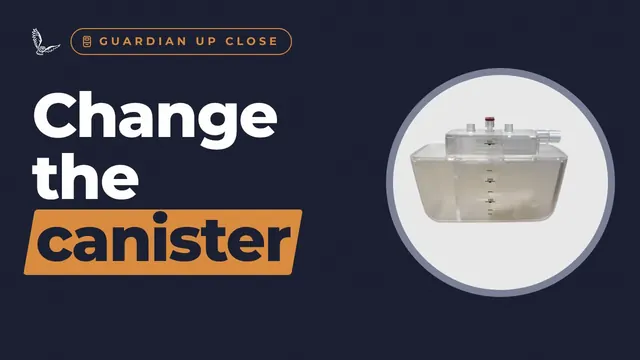
- Canister
- The small pot on the pump that collects wound fluid.
- Sedation
- Medicine that makes a pet calm and sleepy for a dressing change.
Sources
- S1Pitt KA, Stanley BJ. Negative pressure wound therapy: experience in 45 dogs. Vet Surg 2014;43(4):380–387. doi:10.1111/j.1532-950X.2014.12155.x pmc.ncbi.nlm.nih.gov/articles/PMC5026415
- S2Aluco Health. Aluco Guardian™ Negative Pressure Therapy System user manual / instructions for use, version 1, December 2024.
- S3Aluco Health. Guardian brochure 2026: claims and sources.
- S4Aluco Health. Wound bed preparation: why timing matters in NPWT. Educational video script, draft, November 2026.
- S5Aluco Health. Round-the-clock clinical support for veterinary teams (company confirmation, 20 November 2026; user guide: 24/7 clinical support by WhatsApp).
General information about animal wound care, not veterinary advice. Always follow your vet's advice. Aluco Guardian™ is for use by veterinary professionals. Evidence mentioned is not specific to Aluco Guardian™ unless we say so.
See the Aluco Guardian™ in your practice
Hire one for a single case, try it with a demonstration, or buy for a regular caseload. Training and round-the-clock clinical support for vet teams come with it.
Ask your vet whether NPWT could help
Your vet knows your pet best. Take your questions to them, or send them this page.
Watch next
 3:12
28 Jan
NPWT in practice: breaking the long bandage cycle
 1:59
1 Dec
 3:23
1 Dec
 2:31
1 Dec